QUICK NEWS: WORLD EVENT, ECONOMY, E-COMMERCE, LOGISTICS AND NEW TREND

ISRAEL STRIKES SYRIA, ASSAD LEAVES

On September 9, Syria’s Latakia, Damascus, Homs, Qamishli and other places were hit by Israeli air strikes. Israel is reported to have hit a number of major air bases in Syria, destroying a large amount of infrastructure, dozens of helicopters and fighter jets. Earlier, Syrian opposition fighters had taken control of the capital Damascus and “overthrew the Assad regime.” Russia’s Foreign Ministry says President Bashar al-Assad has resigned as president and left Syria.


THE OFFSHORE YUAN ROSE AGAINST THE DOLLAR, EURO AND YEN YESTERDAY


Yesterday, the offshore RMB exchange rate against the US dollar appreciated slightly. As of press time, the offshore RMB exchange rate against the US dollar was 7.2605, up 55 basis points from the previous closing price of 7.2660.


Yesterday, the exchange rate of offshore RMB against the euro appreciated sharply. As of press time, the exchange rate of offshore RMB against the euro was 7.6414, up 236 basis points from the closing price of 7.6650 on the previous trading day.


The offshore yuan appreciated sharply against 100 yen yesterday. At the time of writing, the offshore yuan traded at 4.7800 yen, up 200 basis points from the previous close of 4.8000.


THE ONSHORE RENMINBI ROSE AGAINST THE DOLLAR, EURO AND YEN YESTERDAY


The onshore yuan appreciated slightly against the US dollar yesterday, trading at 7.2545 against the US dollar, up 17 basis points from the previous closing price of 7.2562.


The onshore RMB/euro exchange rate appreciated sharply yesterday.  At the time of writing, the onshore RMB/euro exchange rate was 7.6326, up 262 basis points from the previous closing price of 7.6588.


The onshore yuan appreciated sharply against ¥100 yesterday, trading at 4.7800 at the time of writing, up 200 basis points from 4.8000 on the previous session.


THE CENTRAL PARITY RATE OF RMB DEPRECIATED AGAINST THE US DOLLAR AND EURO, AND APPRECIATED AGAINST THE JAPANESE YEN YESTERDAY


The RMB depreciated slightly against the US dollar yesterday, with the central parity rate of the RMB against the US dollar at 7.1896, down 26 basis points from 7.1870 on the previous trading day.


The RMB depreciated slightly against the euro yesterday, with the central parity rate of the RMB against the euro at 7.6216, down 18 basis points from 7.6198 in the previous trading day.


The yuan appreciated sharply against the yen yesterday, with the central parity rate of the yuan against the yen at 4.8090, 381 basis points higher than the previous trading day’s 4.8090.


BRAZIL’S ECONOMY GREW A SOLID 4% YEAR ON YEAR IN THE THIRD QUARTER


Brazil’s gross domestic product grew 0.9% quarter-on-quarter and 4.0% year-on-year in the third quarter of 2024, according to data from the quarterly System of National Accounts released by the Brazilian Institute of Geographic Statistics (IBGE). According to statistics, the total GDP in the third quarter of 2024 amounted to 3 trillion reais. In terms of sector performance, services and industry grew 0.9 percent and 0.6 percent, respectively, between the second and third quarters, becoming the main drivers of economic growth.


JAPAN ENACTED A 21.9 TRILLION YEN ECONOMIC STIMULUS PLAN


The Japanese government held an interim cabinet meeting recently to formulate comprehensive economic measures, including subsidies for low-income households, stimulating investment in semiconductors and artificial intelligence, and restarting subsidies for electricity and gas.  The total fiscal expenditure for the comprehensive economic measures is 21.9 trillion yen, of which the general accounting expenditure as a supplementary budget for fiscal year 2024 is about 13.9 trillion yen.


CZECH RETAIL SALES ADVANCED 5.5 PERCENT YEAR-ON-YEAR IN OCTOBER, ACCELERATING


The Czech statistical office recently released data showing that retail sales, excluding cars and motorcycles, rose 5.5 percent year on year in October on a calendar adjusted basis, accelerating from 4.8 percent in the previous month.  On a monthly basis, retail sales also increased 0.6 percent.  In addition, the data showed significant growth in retail sales via mail order or the Internet, surging 20.4 percent.


ONLINE TRANSACTIONS IN GERMANY HIT A RECORD HIGH IN 2024


Online transactions in Germany are expected to exceed 88.3 billion euros in 2024, surpassing the peak of 86.7 billion euros set in 2021 and marking a new record for the German e-commerce market, according to data released by the German Trade Association (HDE).  More impressively, a whopping 99 percent of German adult consumers are already used to shopping online, according to HDE.


ALIEXPRESS SAW A 140% YEAR-OVER-YEAR INCREASE IN TRAFFIC DURING BLACK FRIDAY


According to the latest data from SimilarWeb, AliExpress saw a 140% year-on-year increase in traffic during Black Friday 2024, overtaking Temu, Nike and Apple to become the most popular Black Friday shopping platform in the UK.


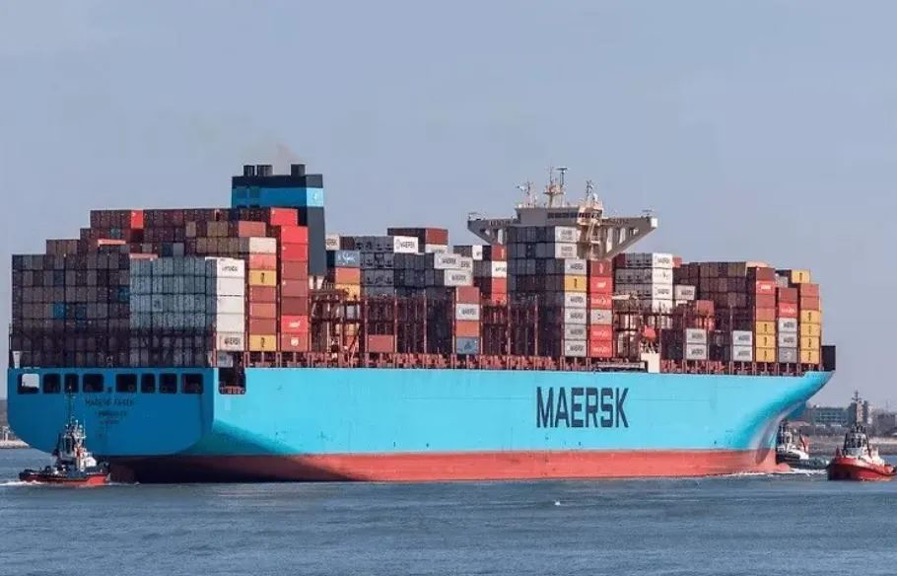
MAERSK SIGNS SAF AGREEMENT WITH LUFTHANSA CARGO


In recent days, Lufthansa Cargo and A.P. Moller-maersk has signed an agreement to promote the decarbonization of air cargo through the use of sustainable aviation fuel (SAF).  “Currently, uptake and availability of the SAF in the aviation industry remains limited.  Our agreement with Lufthansa Cargo enables Maersk to contribute to increased absorption rates.”


Deutsche Bahn Freight said it would cut 5,000 jobs


Deutsche Bahn Freight has announced that it will cut 5,000 jobs by 2029, with 1,000 jobs to be cut first in 2025.  Deutsche Bahn hopes to return to profit by 2026 after years of lossmaking freight operations.  The company decided in October to implement a restructuring plan that expanded from a previous plan to cut 2,300 jobs from 2025.


NVIDIA HAS BEEN PLACED UNDER INVESTIGATION FOR ALLEGED ANTITRUST VIOLATIONS


Recently, the State Administration for Market Regulation launched an investigation against NVIDIA in accordance with the law for suspected violation of the Anti-Monopoly Law of the People’s Republic of China and the Announcement of the State Administration for Market Regulation on the anti-monopoly Review decision of NVIDIA’s acquisition of the equity of Meloxis Technology with additional restrictive conditions.  On the news, the stock closed down 2.55 percent at $138.810, wiping out $88.9 billion in market value overnight.


VOLVO’S GLOBAL SALES ROSE 5% IN NOVEMBER FROM A YEAR EARLIER


Volvo Cars reported global sales of 66,977 vehicles in November, up 5 percent from the same month last year.  Most of the growth was driven by Europe and the US.  Sales in China are down, but the EV lineup is solid.  Sales of electrified models, or fully electric and plug-in hybrid models, were up 40% from a year earlier and accounted for 48% of all car sales in November


THE “Guzi” ECONOMY IS ON TRENDING


Recently, A – share market in the “Guzi economy” related concept stocks suddenly appear.  Wind data show that since August this year, the “Guzi economy” index has climbed significantly, with a cumulative increase of more than 30% as of December 4.

The so-called “Guzi” is actually the transliteration of the English “Goods”, which generally refers to the derivative products (peripheral products) of IP copyright works such as anime and games related to the pan-secondary element, such as “Baji” (badge), brand, key chain, etc.


Contact us to know more one-stop service for sourcing solutions in China and global import and export analysis.
Market share on trans-Pacific routes in November 2024

BORN OF THE NEW OVERLORD! CMA CGM SURPASSES MAERSK!

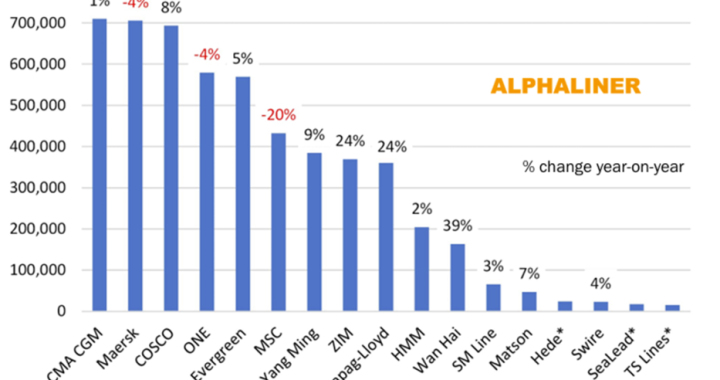
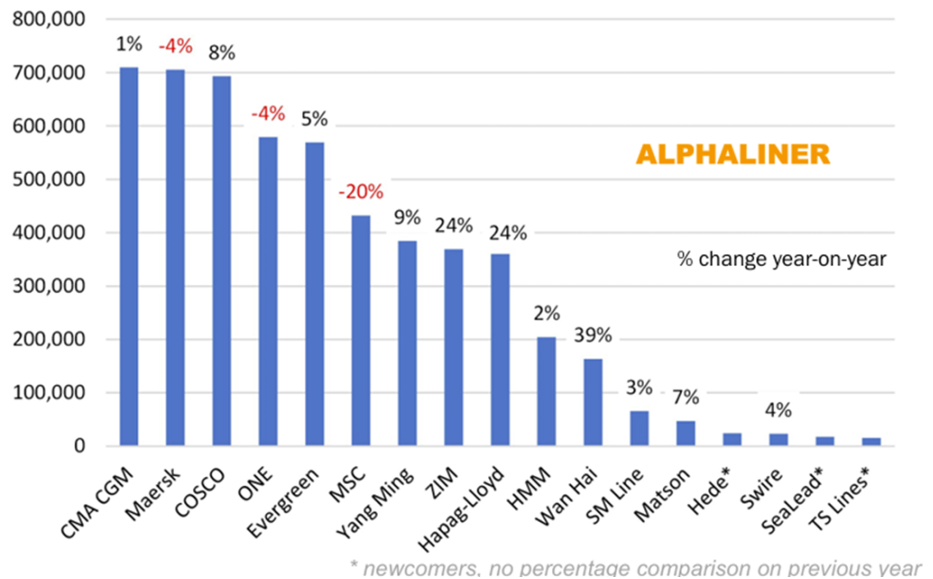
According to the latest Alphaliner research report, CMA CGM, Maersk and COSCO were in the lead on the trans-Pacific route in November, with the three liner companies deploying very close capacity.


Specifically, in November, CMA CGM’s market share on trans-Pacific routes reached 13.2 percent, surpassing Maersk’s 13.1 percent to become the largest liner company on trans-Pacific routes.  Cosco Shipping Group ranked third with a 12.9% market share.

Market share on trans-Pacific routes in November 2024


In November, the total number of container ships deployed on the Far East-North America trans-Pacific route was 562 with a total capacity of nearly 5.4 million TEU, representing a 4.2% year-on-year increase compared to November 2023.


Based on this, the capacity deployed on trans-Pacific route trade represents 17% of the global fleet.  At the same time, due to the Red Sea crisis, which caused containers to sail around the Cape of Good Hope, the Asia-Europe route took up more capacity, accounting for 22 per cent of the global fleet.


Meanwhile, CMA CGM’s capacity on trans-Pacific routes rose 1 per cent, Maersk’s fell 4 per cent and COSCO’s rose 8 per cent.

Maersk

The fastest growth on the Far East-North America trans-Pacific route was recorded by Wanhai Shipping, which saw a 39.3% increase in capacity compared to November 2023 and a 3.1% market share thanks to the deployment of a series of 13,450TEU newbuilds.  It was followed by Zim (Zim) with a 24.1% YoY increase.


At the same time, strong demand, especially at ports in the West, has attracted three new companies – Hopede, SeaLead and T.S. INES – which, despite having only a 1% market share on the trans-Pacific route, have lost ground as Trump’s tariff 2.0 and the ILA-USMX impasse take hold.  2025 is expected to repeat the good outlook of 2024.

MSC

Alphaliner points out that in November, MSC, currently the world’s largest liner, lost 20 per cent of its capacity on trans-Pacific routes, putting it in sixth place.  However, this is only temporary for now.


With the conclusion of Maersk’s 2M alliance collaboration with MSC in February 2025, MSC will redeploy its Far East-America routes, and MSC’s capacity on transoceanic routes is expected to grow significantly.

Contact us to know more one-stop service for sourcing solutions in China.

import and export situation

Iron Ore Shipments Decline Amid Weakening Demand: Insights into Coal and Grain Markets

Iron Ore Shipments Decline as Demand Weakens

As of November 8, 2024, the Baltic Dry Index (BDI) rose to 1,495 points, marking an 85-point increase (up 6.03%) since October 26. The Capesize Index (BCI) surged by 460 points, or 24.78%, while the Panamax Index (BPI) dropped 25 points, down 2.08%.

Iron Ore Market Trends

Global iron ore shipments for November 4–10 declined by 1.343 million tons to 30.207 million tons. However, foreign ore arrivals increased, with total iron ore arrivals at China’s 47 major ports rising by 1.384 million tons to 24.903 million tons. Despite a slight drop in port inventory, levels remain elevated.

On the demand side, steel mill profitability has been on a downward trend for three consecutive weeks, falling 1.3% to 59.74%. The blast furnace operating rate edged down by 0.15% to 82.29%, while daily iron production decreased by 14,100 tons to 2.3406 million tons. This reflects continued declines in iron production amid weakening demand. As the peak season ends, demand is marginally weakening, further pressured by low steel mill profitability. The current expansion cycle appears to be tapering off.

Overall, iron ore fundamentals are showing marginal weakness, with market sentiment cooling. Trading activity is expected to increasingly align with underlying fundamentals.


Coal Market

Global coal production hit a record high in 2023, driven by increased output in China, India, and Indonesia. Over 30 new coal mines began operations last year, with 25 in China and 4 in India.

China remains the dominant supplier, accounting for approximately 55% of global coal production. India achieved record coal output growth for the second consecutive year, nearing Indonesia’s production levels to become the world’s second-largest coal producer. India also plans to double coal production by 2030.

Despite higher domestic production, China continued to increase its coal imports, while Indonesia and Mongolia expanded their coal exports to meet global demand.


Grain Market

The global grain futures market experienced volatility due to a stronger U.S. dollar, improved weather, and policy shifts.

  • Wheat futures posted their largest decline since June, pressured by a strong dollar and favorable weather in key growing regions boosting output.
  • Corn futures remained flat amid demand concerns.
  • International tender demand lent some support to prices, but the dollar’s strength continued to erode the global competitiveness of U.S. agricultural commodities.

These dynamics reflect a challenging environment for grain markets, as currency and weather factors heavily influence global pricing.

Main source: Shipbid.net 

Contact us to get an import and export sample report of your target commodity now.

Imported Vietnam fresh coconut

Custom Announcement on Phytosanitary Requirements for Imported Vietnamese Fresh Coconuts

Source: China Custom

According to the relevant laws and regulations of China and the General Administration of Customs of the People’s Republic of China and the Ministry of Agriculture and Rural Development of the Socialist Republic of Vietnam on the phytosanitary requirements for the export of fresh coconuts from Vietnam to China, with immediate effect, the import of fresh coconuts from Vietnam in line with the following relevant requirements is allowed.
I. Inspection and quarantine basis
(A) “Law of the People’s Republic of China on Biosecurity”;
(B) “People’s Republic of China Entry and Exit Animal and Plant Quarantine Law” and its implementing regulations;
(C) “Food Safety Law of the People’s Republic of China” and its implementing regulations;
(D) “imported fruit inspection and quarantine supervision and management measures”;
(E) “General Administration of Customs of the People’s Republic of China and the Socialist Republic of Vietnam Ministry of Agriculture and Rural Development on Vietnam’s fresh coconut phytosanitary requirements for China.
Second, the name of goods allowed to enter the country
Fresh coconut (including green coconut and peeled coconut with fruit stalk ≤ 5cm, hereinafter referred to as coconut), scientific name Cocos nucifera, English name Coconut.
III. Permitted places of origin
Coconut producing areas in Vietnam.

Email us at contact@nkmarketresearch.com to get more info or get to know  NK Import and Export Analysis service now.

Freight rates are soaring! Chinese goods dominate the global market

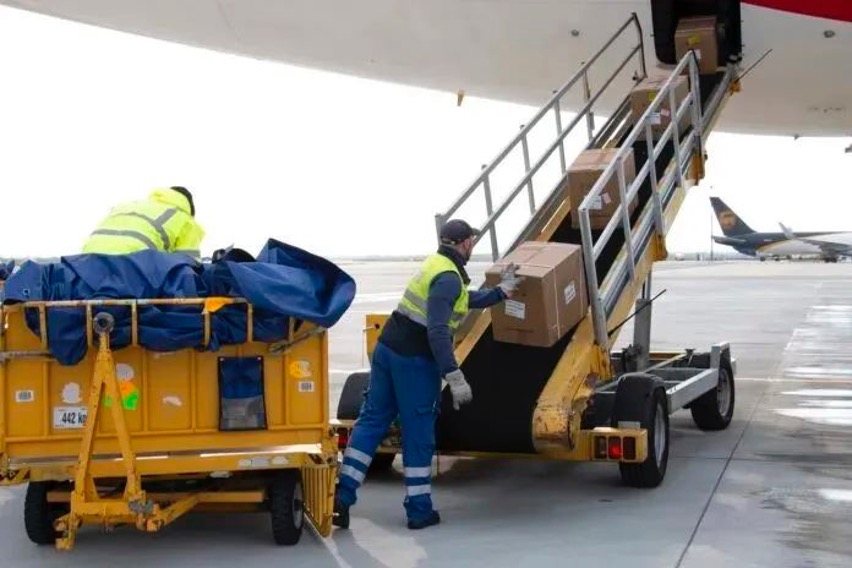
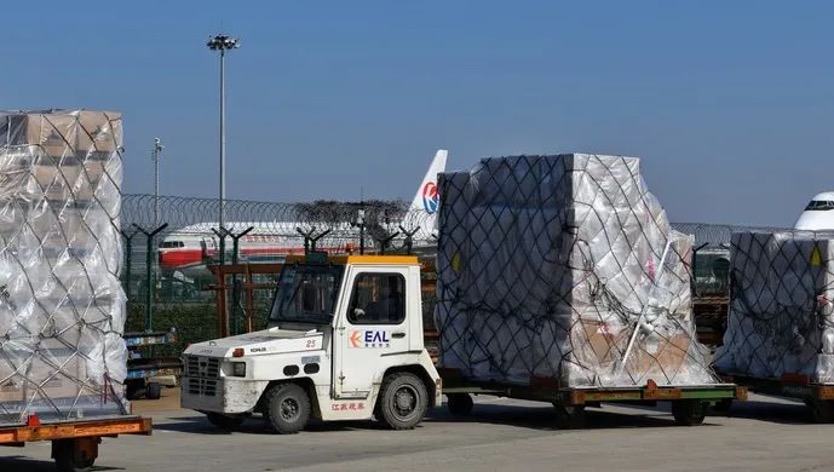
The demand of e-commerce has emerged as the principal impetus for the growth of the global air freight market. Two-thirds of the air cargo volume in China originates from e-commerce operations.

Against this backdrop, cargo aircraft operators are also seizing the opportunity of the surging demand to drive up the freight rates.

A freight forwarder in Shanghai stated, “We are currently in the annual peak period of air freight. This week, the freight rates to Europe and the United States have exceeded the peak of last year.

This is not surprising. The main driving force comes from e-commerce, and it is anticipated that e-commerce goods will constitute two-thirds of the overall air cargo volume.

According to data from WorldACD, the air freight rates for the global all-market rose by 2% to $2.84 per kilogram as of December 1, setting a new high for the year. Spot freight rates rose by 3%, with a 4% increase in the Asia-Pacific region and a 3% increase in North America. As the Thanksgiving holiday in the United States came to an end, capacity began to stabilize.

STRONG GROWTH IN ASIAN MARKETS AND A SHARP RISE IN FREIGHT RATES

WorldACD also noted that weekly air freight rates in specific Asian markets such as China, Hong Kong, Taiwan, Japan, South Korea, and Vietnam have seen significant increases. Specifically:


Japan: $4.97 per kilogram, up 6% from the previous week

South Korea: $5.49 per kilogram, up 6% from the previous week

Vietnam: $4.88 per kilogram, up 3% from the previous week

China: $5.10 per kilogram, up 7% from the previous week

Hong Kong: $6.25 per kilogram, up 9% from the previous week

Taiwan: $4.07 per kilogram, up 5% from the previous week


All of these markets are experiencing higher air freight rates compared to the same period last year, with particularly high year-on-year increases in Japan and Vietnam, with increases of over 30%, and Taiwan with an increase of 46%.

Despite the current high demand in the market, industry insiders believe that demand may ease in the short term. “We expect there may be a brief drop in freight rates during the Christmas period, but with the Chinese New Year (January 28) approaching, demand will surge again.”

However, he also noted that freighter operators were taking advantage of future capacity tightness – such as port strikes on the East Coast and Bay Area, the imposition of new tariffs and wholesale scheduling changes by carriers – to increase contracted rates.


“Some major operators have significantly increased their annual BSA prices in Europe by more than $1.40 per kg, which is significantly higher than 2024 rates. As far as I can remember, it’s been a record high for the last many years.”


“The imposition of U.S. tariffs on Chinese imports in early 2025 is expected to prompt companies to rush shipments before the tariffs take effect, triggering a demand surge in the first quarter of 2025,” CargoFacts Consulting said.”This wave of demand will put additional pressure on logistics networks and tight air capacity will push rates even higher.”

Contact us to know more one-stop service for sourcing solutions in China and global import and export analysis.